Why Copying MLB Swings Is Hurting Your Youth Hitter
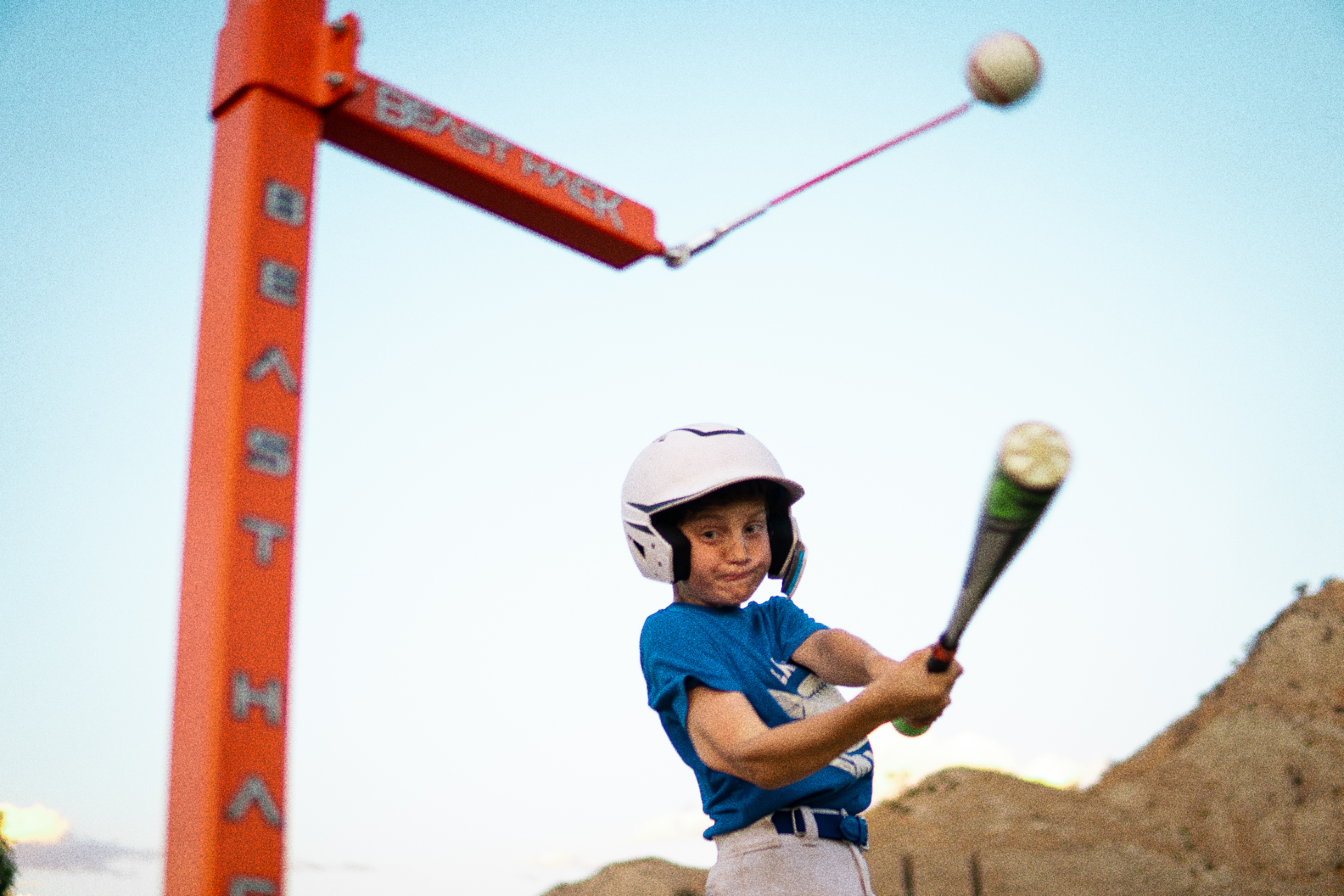
You've probably seen it.
A 10-year-old in the backyard, trying to copy the big leg kick, the dramatic hand load, or the exact bat path of their favorite MLB player. They look the part in the mirror or on video. Then the game starts, and the swing falls apart.
This is one of the most common mistakes youth hitters make today. And it's holding a lot of young players back.
Trying to copy MLB swings is understandable. Kids want to look like the pros they watch on TV. The problem is that most MLB swings are built for elite athletes with years of professional strength, timing, and pitch recognition. When young players try to copy those moves too early, it usually creates more problems than it solves.
MLB Swings Are Built for Elite Athletes, Not 10-Year-Olds
Major league hitters have spent years developing elite strength, explosive power, and pitch recognition. What looks like a "flaw" in their swing is often a highly compensated move that works because of the physical tools and experience they already have.
When a 9, 10, or 12-year-old tries to copy those moves, several things usually happen:
- The swing gets longer and slower
- The barrel casts or drags through the zone
- The hitter pulls off the ball or gets late on contact
- Timing becomes inconsistent because the extra movement makes it harder to adjust to different pitches
Many of the swings you see on TV today look very different from how those same players swung when they were 12 years old. The flashy moves often come later, after the fundamentals are already rock solid.
For youth hitters, the goal should not be to look like a big leaguer. The goal should be to develop a repeatable, fundamentally sound swing that produces consistent, hard contact.
Build Your Own Swing First, Then Refine It Later
At ages 8 to 14, young hitters need to focus on a few key things:
- Staying connected with a shorter, more compact swing
- Proper rotation and weight transfer
- Hitting the ball where it's pitched
- Developing rhythm and timing through repetition
A simple, repeatable swing almost always beats a complicated, flashy one at this age. The players who develop the best at the youth level are usually the ones who groove solid mechanics early and then add more advanced movements later, when their bodies and pitch recognition can actually support them.
Trying to skip ahead and copy MLB swings often creates bad habits that are hard to fix later.
The Power of Quality Reps Over Random Swings
One of the biggest challenges with backyard training is that most kids take wild, inconsistent swings. Without a pitcher or immediate feedback, it's easy to develop bad habits without even realizing it.
The players who improve the fastest are the ones getting high-quality, repeatable reps. Every swing should reinforce good mechanics instead of just reinforcing whatever feels good in the moment.
This is where tethered-ball training becomes extremely valuable. When the ball is attached and returns on a consistent path, the hitter gets immediate feedback. If the swing is off-plane or the contact is poor, it shows up right away. Over time, this builds real muscle memory much faster than random tee work or soft toss.
Quality reps beat random swings every single time.
Training That Builds Real Fundamentals
This is exactly why we built the Beast Hack system the way we did.
The Beast Hack hitting station forces the hitter to stay on plane and make centered contact on every swing. There is no way to cheat it. The tethered ball returns on a consistent 6-to-12 path, which helps players groove proper rotation and see mechanical issues clearly.
It also uses the 3 Paths of Rotation methodology we teach. This gives young hitters a simple, repeatable framework they can actually understand and apply, instead of trying to copy complicated big-league moves they're not physically ready for.
The system is height-adjustable from 8 inches to 60 inches, so it grows with the athlete from little league all the way through high school. And because every swing is a quality rep, players develop real confidence instead of just hoping the swing "feels right" on game day.
For families who want this kind of training at home without the full commercial price, we now offer the Beast Hack Starter Kit, a more affordable version designed specifically for backyard use with players 14 and under. It ships as bare metal so you can paint it your child's favorite color or team colors, and it uses the same core engineering as the stations used by parks and recreation departments across the country.
Give your young hitter a station built for real reps.
Shop the Beast Hack Starter Kit, $199What to Focus on Instead of Copying MLB Swings
Here are a few practical things parents and coaches can do instead of encouraging kids to copy the pros.
Watch for these red flags when your child starts copying big league swings:
- Big, dramatic leg kicks that throw off timing
- Very long swings with lots of hand movement
- Pulling off the ball or getting underneath it consistently
Use simple, age-appropriate cues instead:
- "Short to the ball, long through it"
- "Stay connected"
- "Hit the ball where it's pitched"
Focus on process over outcome at this age. Celebrate quality swings and good contact, not just home runs. The players who build the best swings long-term are the ones who develop repeatability first.
Build a Swing That Works for Your Kid, Not Someone Else's
The best youth hitters aren't the ones trying to copy MLB swings. They're the ones who develop their own repeatable, fundamentally sound swing through smart, high-quality repetition.
When young players stop chasing someone else's swing and start building their own, everything gets better: contact, confidence, and consistency.
If you're looking for a better way to help your young hitter train at home, the Beast Hack Starter Kit was made for exactly this stage of development. It gives players the quality reps they need to build real fundamentals without the high cost of full commercial equipment.
Ready to give your young hitter a better way to train?
Ships from the USA. Built to last from little league through high school.
About the Author
Keaton Smith is the founder of Beast Hack® and a former professional baseball player who played in the Austrian Bundesliga. The Beast Hack® training methodology was inspired by hitting lessons from Paul Blair, a two-time World Series champion with the New York Yankees.